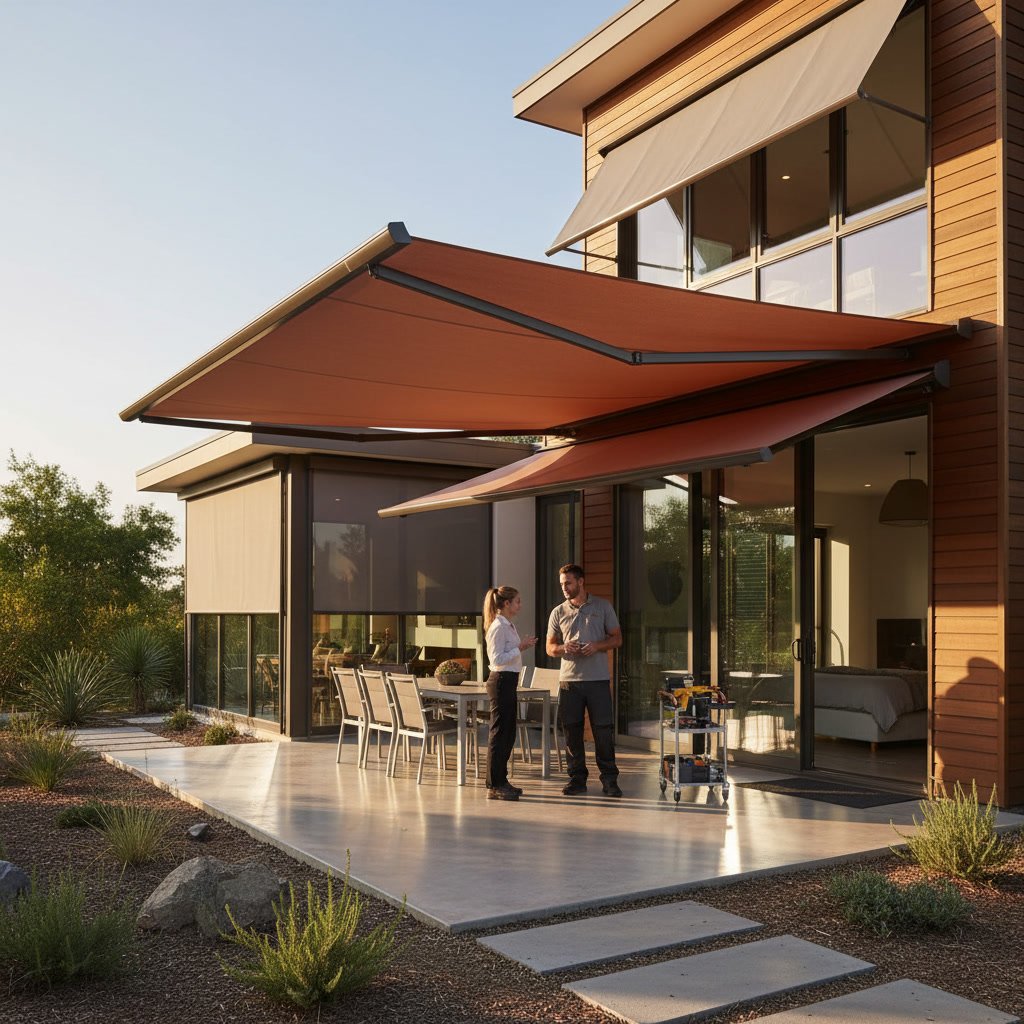
Striped awning fabric requires precise alignment during installation to ensure the pattern runs level and symmetrical across the frame. Solid color fabrics offer more installation flexibility since minor misalignments are invisible. Both fabric types use the same mounting hardware and structural components, but the visual tolerance for error differs significantly. Understanding these differences helps property owners make informed decisions about both aesthetics and installation complexity.
Pattern choice affects more than just curb appeal. The installation process, the margin for adjustment during setup, and even the long-term appearance after years of use all vary between striped and solid fabrics. Professional installers approach each fabric type with different preparation and alignment strategies to deliver a finished product that looks clean and professional.
Why Fabric Pattern Matters During the Installation Process
The pattern on your awning fabric dictates the level of precision needed when mounting the roller tube and tensioning the fabric. With solid colors, the installer can make minor adjustments to fabric tension and alignment without creating visible issues. A few inches of lateral shift or a slight angle in the mounting bracket goes unnoticed.
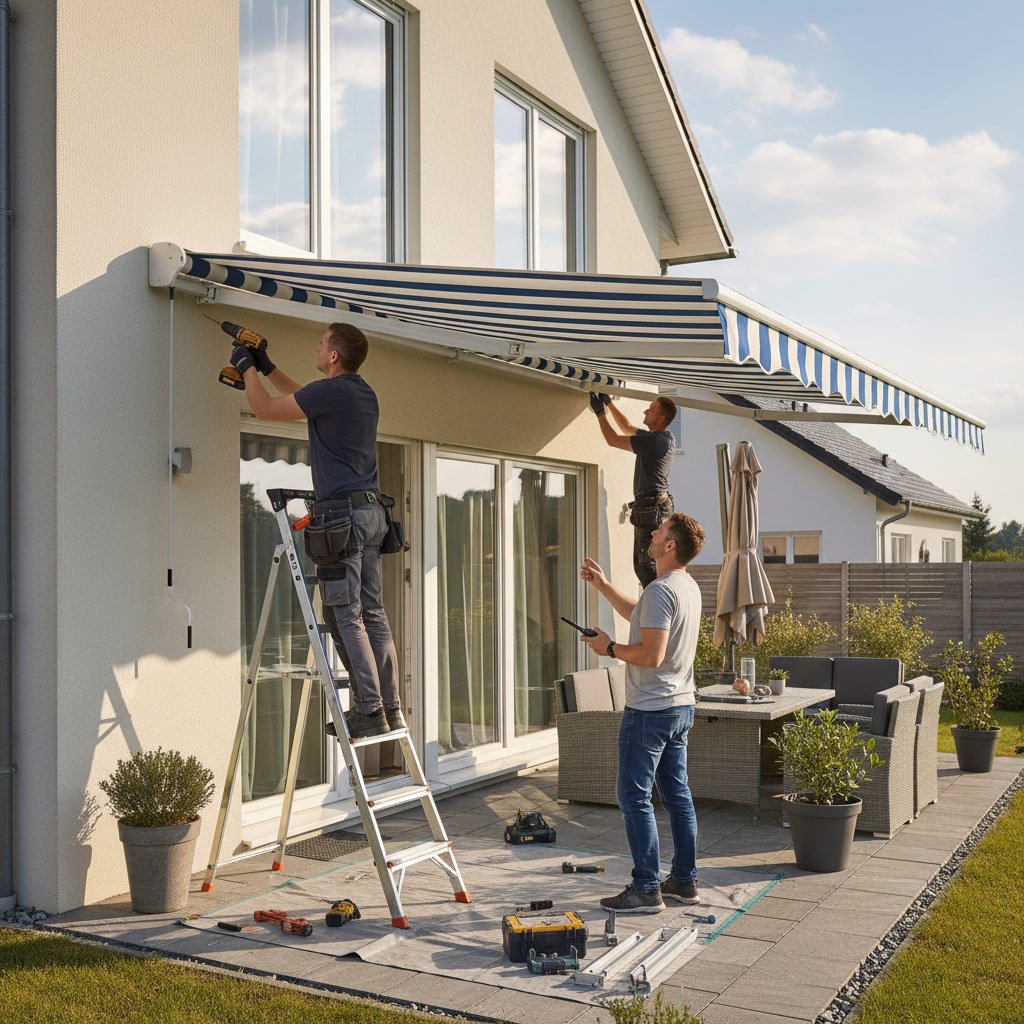
Striped patterns reveal every installation imperfection. If the mounting brackets sit even a quarter-inch off level, the stripes will run visibly diagonal across the awning face. This makes the preparation phase longer and more detailed. Installers must verify that the mounting surface is level, the brackets are perfectly aligned, and the fabric is centered before final tensioning.
Most professional awning installations account for these differences in their project timeline. A striped fabric typically adds 15 to 30 minutes to the installation process compared to a solid color on the same frame size.
How Stripes Change the Visual Perception of Your Awning
Striped fabrics create strong horizontal or vertical lines that draw the eye across the entire span of the awning. This amplifies the awning’s width and makes it a focal point on the building facade. Solid colors blend more subtly with the architecture and allow other design elements to stand out.
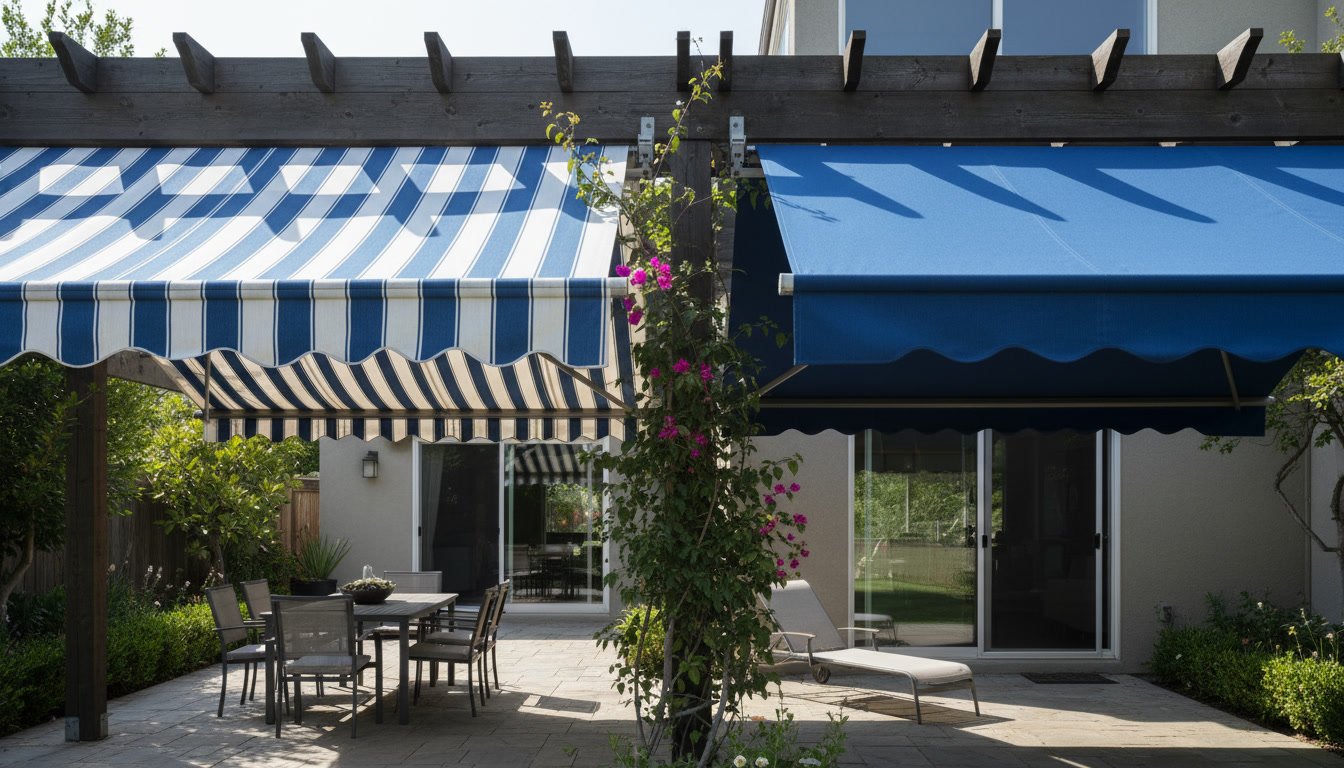
Wide stripes tend to make an awning look larger and more prominent. Narrow stripes create a classic, traditional appearance often seen on storefronts and cafes. Solid colors provide a clean, modern look that works well with minimalist architecture or when you want the awning to recede visually.
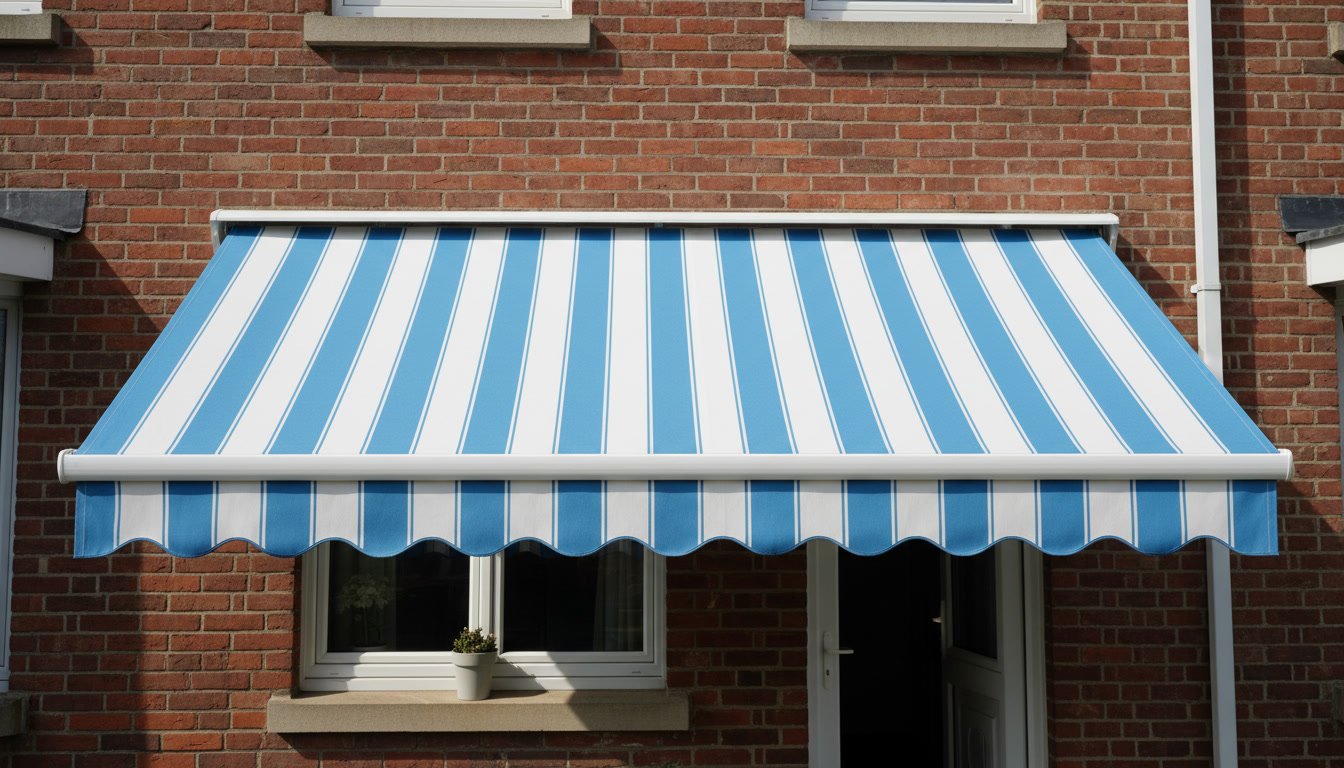
Color contrast within the stripe pattern also affects how forgiving the fabric is over time. High-contrast stripes, such as navy and white, show dirt and fading more noticeably than low-contrast combinations like beige and tan. Solid dark colors hide stains better than solid light colors, but they also show fading and sun damage more clearly after several years.
Alignment Challenges Unique to Striped Patterns
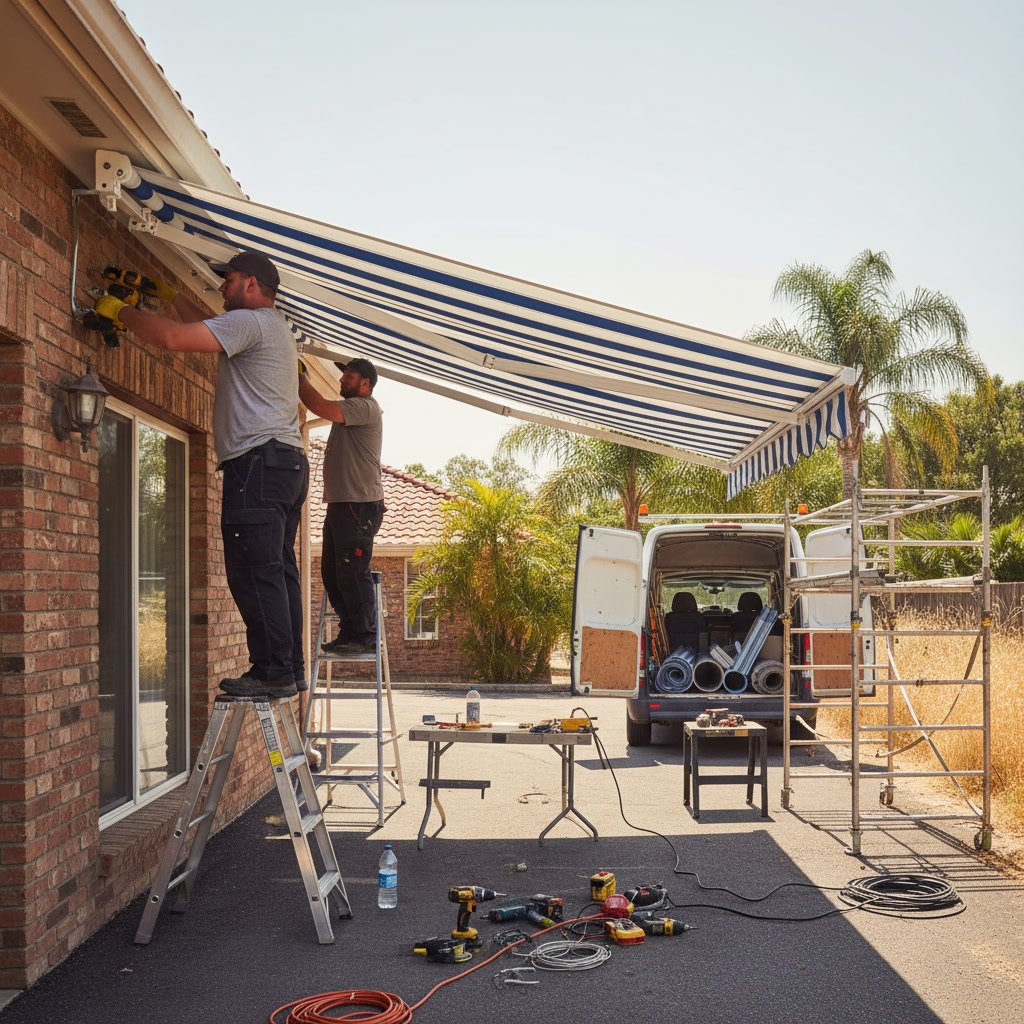
When installers mount a striped awning, they must ensure the stripes run perfectly parallel to the ground. This requires confirming that the mounting wall is plumb and that the awning frame sits level both horizontally and front to back. Any tilt in the frame translates directly into slanted stripes.
On older buildings in areas like Kent Island, walls may have settled or shifted over decades. Installers use shims and adjustable brackets to compensate for out-of-plumb surfaces. With solid fabrics, minor adjustments are invisible. With stripes, every correction must be precise or the pattern will betray the compromise.
Fabric seams also present alignment concerns. Most awning fabrics are sewn from multiple panels to achieve the desired width. On striped fabrics, the seam must align so the pattern continues uninterrupted. Quality manufacturers cut and sew striped fabrics with pattern-matching techniques, but the installer must still position the fabric correctly on the roller tube to keep the seam centered and the stripes symmetrical.
Tensioning and Stretching Behavior Between Fabric Types
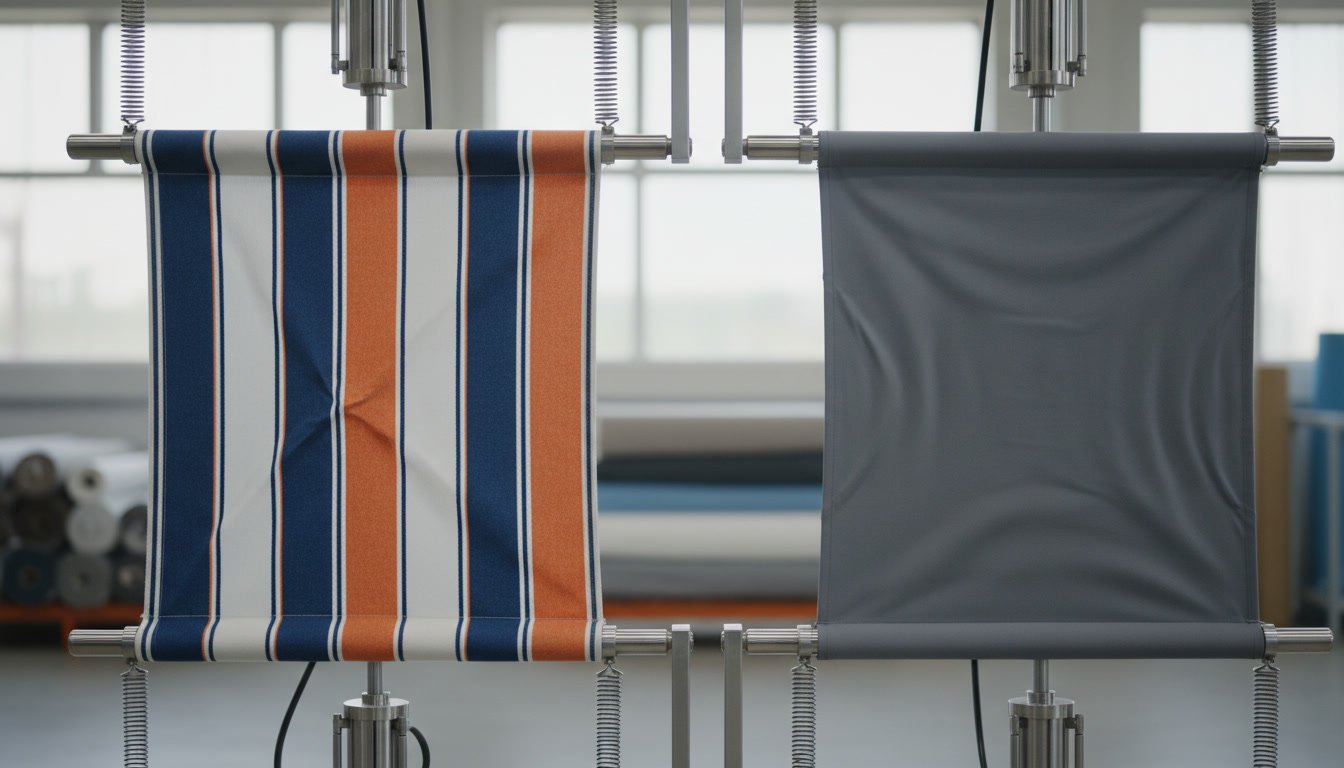
All awning fabrics stretch slightly under tension, but striped patterns make this stretching visible. If one side of the awning is tensioned more than the other, the stripes will curve or bow. Installers must apply even tension across the entire width of the fabric to keep stripes straight.
Solid fabrics tolerate uneven tension better from a visual standpoint. The fabric may still wrinkle or sag if tension is inconsistent, but the eye does not immediately detect the problem. With stripes, even a small amount of differential tension creates a noticeable wave in the pattern.
Retractable awnings add another layer of complexity. As the fabric rolls and unrolls repeatedly, it can shift slightly on the roller tube. Striped fabrics show this shift as a gradual skewing of the pattern. High-quality residential awning systems use fabric guides and tension controls to minimize this drift, but it remains more apparent on striped patterns than on solids.
Step-by-Step Comparison of Installation Techniques
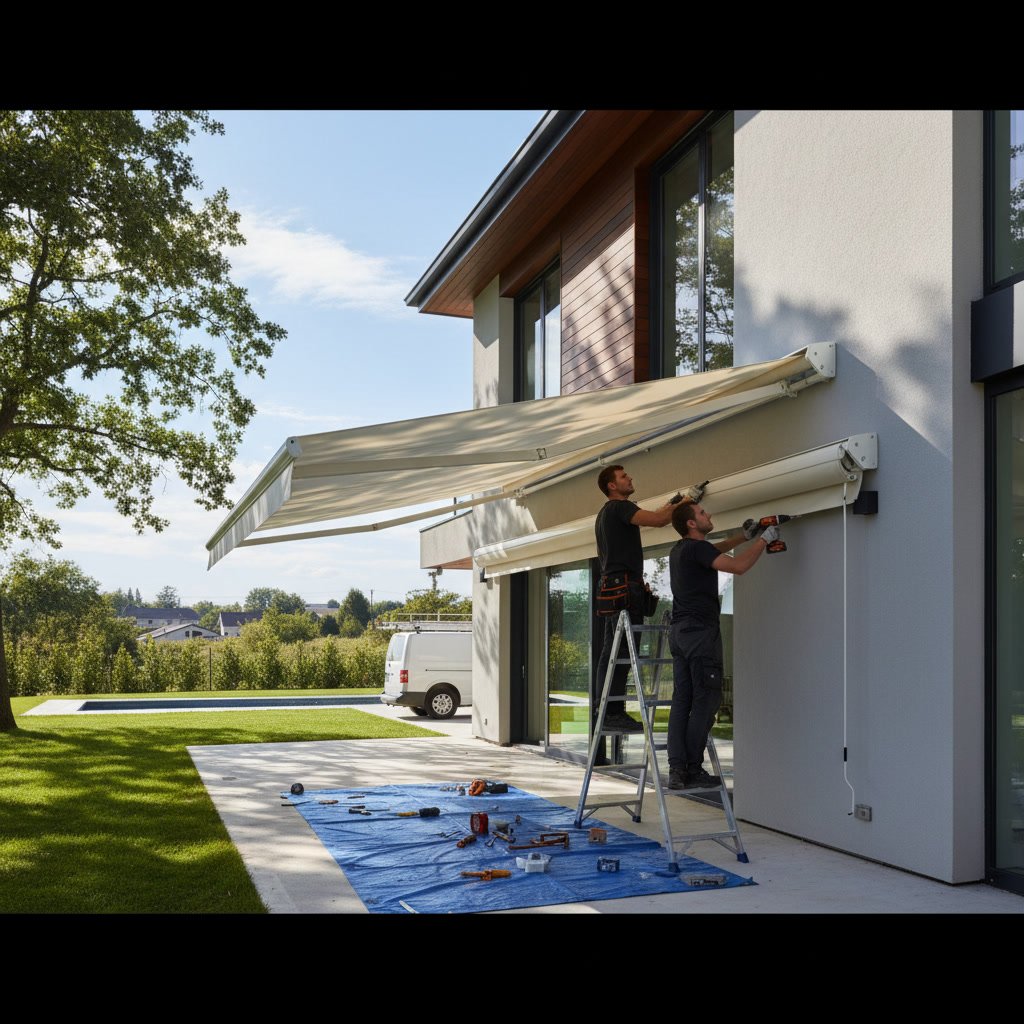
For solid color fabric installations, the installer typically mounts the brackets, attaches the roller tube, slides the fabric onto the tube, and tensions the awning. Minor alignment errors can be corrected after the fact without visible consequence.
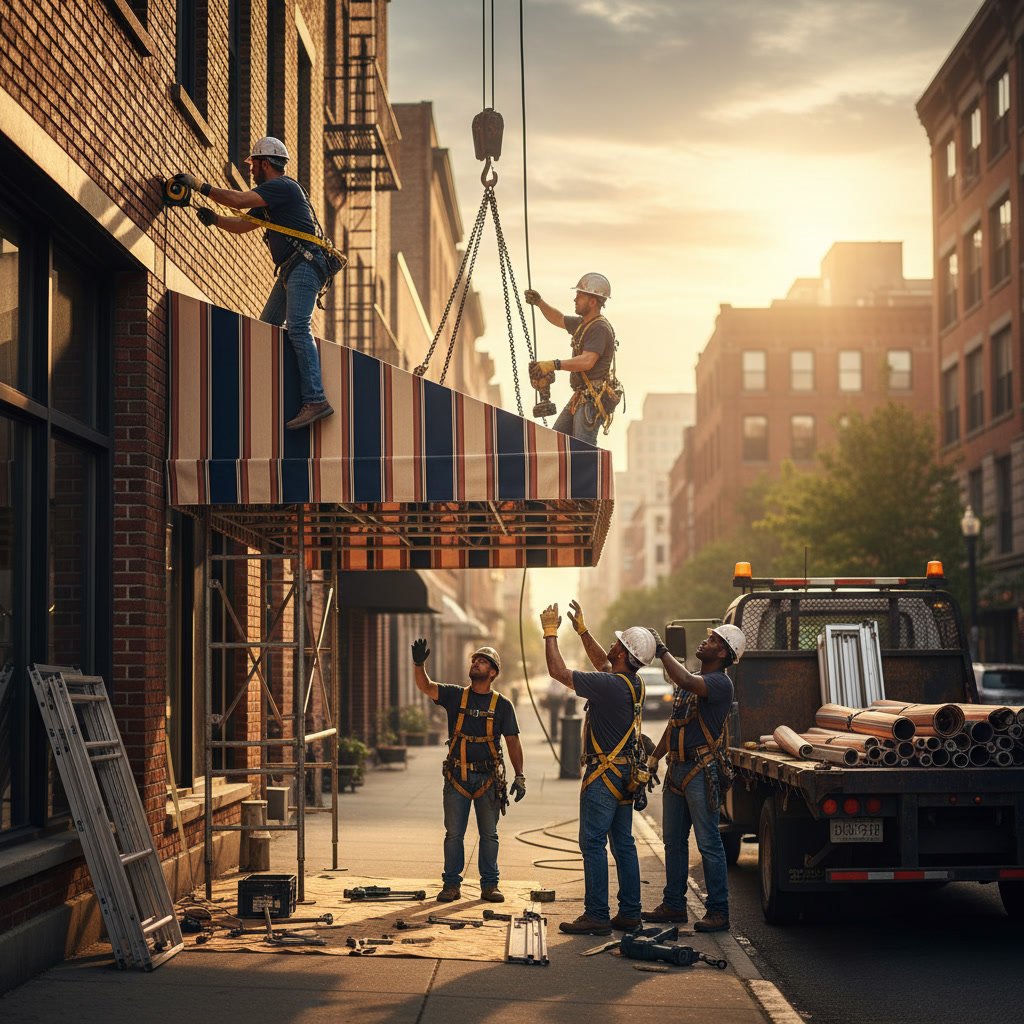
For striped fabric installations, the process includes additional checkpoints. First, the installer verifies that the mounting surface is level and marks the bracket positions with a laser level. Second, the fabric is pre-positioned on the roller tube and centered before any mounting occurs. Third, the installer checks stripe alignment before final tensioning. Fourth, a post-installation inspection confirms that the stripes run parallel to the ground plane and that seams are centered.
These extra steps require more time and precision. Experienced installers also use temporary guides or alignment marks on the roller tube to ensure the fabric does not shift during the mounting process. Understanding how awning installation works from measurement to final setup helps property owners appreciate the craftsmanship required for pattern-matched fabrics.
How Fabric Choice Affects Repair and Restoration Work
When an awning needs fabric replacement, striped patterns require exact pattern matching if only part of the fabric is being repaired. Solid colors allow for partial patching or panel replacement without worrying about pattern continuity.
If a striped awning fabric fades unevenly, the stripes may lose contrast or shift in color tone. This makes partial repairs more noticeable. With solid fabrics, slight color variations blend more easily. Professional awning repair and restoration services often recommend full fabric replacement for striped awnings rather than sectional repairs to maintain visual consistency.
Seam repairs also differ. A seam failure on a striped awning disrupts the pattern flow and is immediately visible. On a solid fabric, a repaired seam may show as a slight line but does not break up a visual rhythm. Installers must re-align the pattern during seam repair, adding complexity and time to the job.
Cost Implications and Material Availability
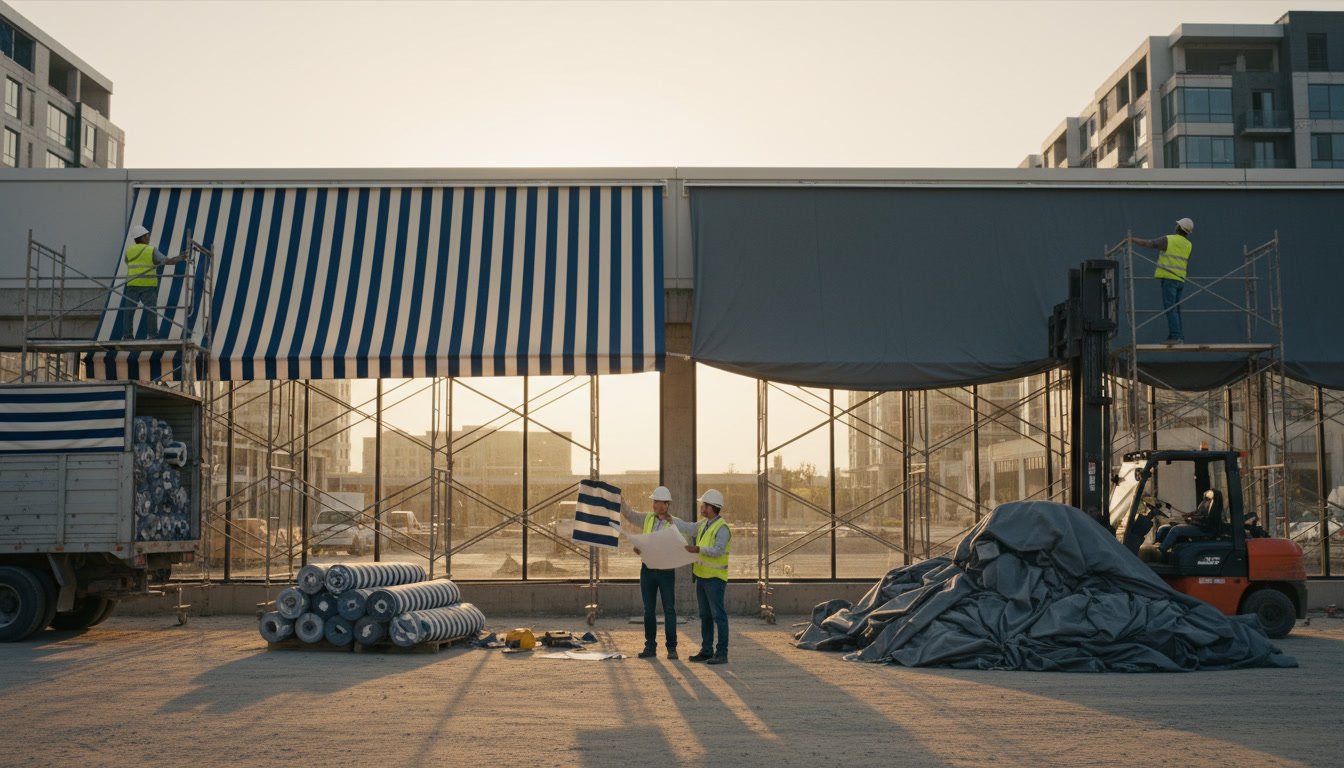
Striped fabrics generally cost the same per square foot as solid colors from most manufacturers. The price difference comes from installation labor. Because striped patterns demand more precision and time, labor costs can run 10 to 15 percent higher than for solid fabric installations on comparable projects.
Material lead times can also vary. Solid colors are often stocked in standard widths and can ship immediately. Custom striped patterns, especially those requiring specific color combinations or stripe widths, may require special ordering and longer production times. This can add one to three weeks to the project timeline depending on the manufacturer.
Factory-direct pricing helps offset these costs. Working with a provider that eliminates middleman markups can save enough on material costs to cover the additional labor required for striped fabric installation. This makes pattern choice less of a budget constraint and more of a design decision.
Maintenance Differences Over the Awning Lifespan
Striped fabrics show dirt accumulation along the seams and in the valleys of the pattern more readily than solid colors. Regular cleaning is more important to maintain the crisp appearance of the stripes. Solid fabrics can go longer between cleanings without the visual impact becoming obvious.
Fading occurs on all awning fabrics exposed to sunlight, but striped patterns reveal uneven fading more clearly. If one stripe color fades faster than another, the contrast ratio changes and the awning looks worn even if the fabric is structurally sound. Solid fabrics fade uniformly, so the change is less jarring.
Most modern awning fabrics come with fade-resistant treatments and warranties that cover colorfastness for five to ten years. Even with these protections, high-contrast striped patterns will show age sooner than low-contrast or solid options. Regular maintenance routines and protective treatments can extend the visual lifespan of any fabric, but stripes demand more attention to detail.
Regional Considerations for Maryland Properties
Coastal and waterfront properties face higher humidity and salt exposure, which can accelerate fabric wear. Striped awnings in these environments may show mildew or salt staining along the pattern lines, making regular cleaning even more critical.
Homes and businesses in areas with heavy tree cover may experience more organic debris landing on the awning. Pine needles, leaves, and sap can stain striped fabrics in visible patterns. Solid colors tend to hide these stains better until the next scheduled cleaning.
Wind exposure also matters. Retractable awnings should be retracted during high winds, but if a striped awning is left extended and experiences strong gusts, the fabric can shift on the roller tube. This causes the stripes to skew, requiring professional re-tensioning to restore the original appearance.
Choosing the Right Fabric Pattern for Your Property
If your building has strong architectural lines and you want the awning to complement that geometry, striped patterns reinforce the visual structure. If your property features varied textures, colors, or decorative elements, a solid fabric may provide a cleaner backdrop.
Consider the viewing distance as well. Awnings seen from across a street or parking lot benefit from bold stripes that create visual interest at a distance. Awnings viewed primarily from close range, such as over a patio door, may look busy with wide stripes but elegant with a solid color or narrow stripe pattern.
Your tolerance for maintenance also plays a role. If you prefer low-maintenance solutions and want the awning to look good with minimal intervention, solid colors are more forgiving. If you enjoy the classic appeal of stripes and are willing to invest in regular cleaning and alignment checks, striped fabrics deliver a timeless look.
Professional Installation Makes All the Difference
Choosing between striped and solid awning fabrics comes down to aesthetic preference, installation precision, and maintenance commitment. Striped patterns create bold visual statements and require meticulous alignment during installation to ensure the pattern runs true. Solid colors offer installation flexibility and easier long-term care. Both options provide excellent shade and weather protection when installed correctly.
Awning “R” Us has served Maryland families and businesses for over 40 years, handling every installation in-house with the care and precision each fabric type demands. Whether you are drawn to the classic appeal of stripes or the clean simplicity of solid colors, our licensed and insured team ensures your awning looks perfect from day one and performs reliably for years. Reach out at +14107397544 to discuss your project and get expert guidance on fabric selection and installation.