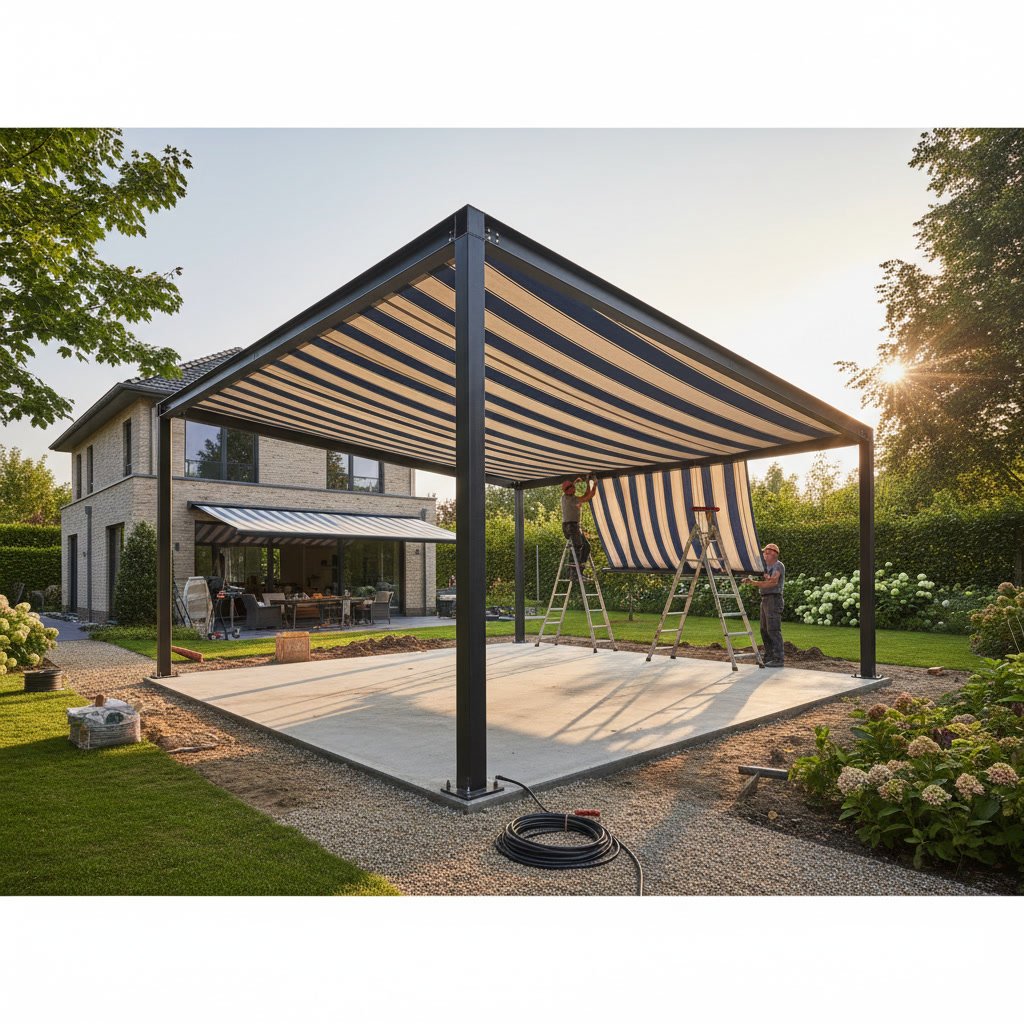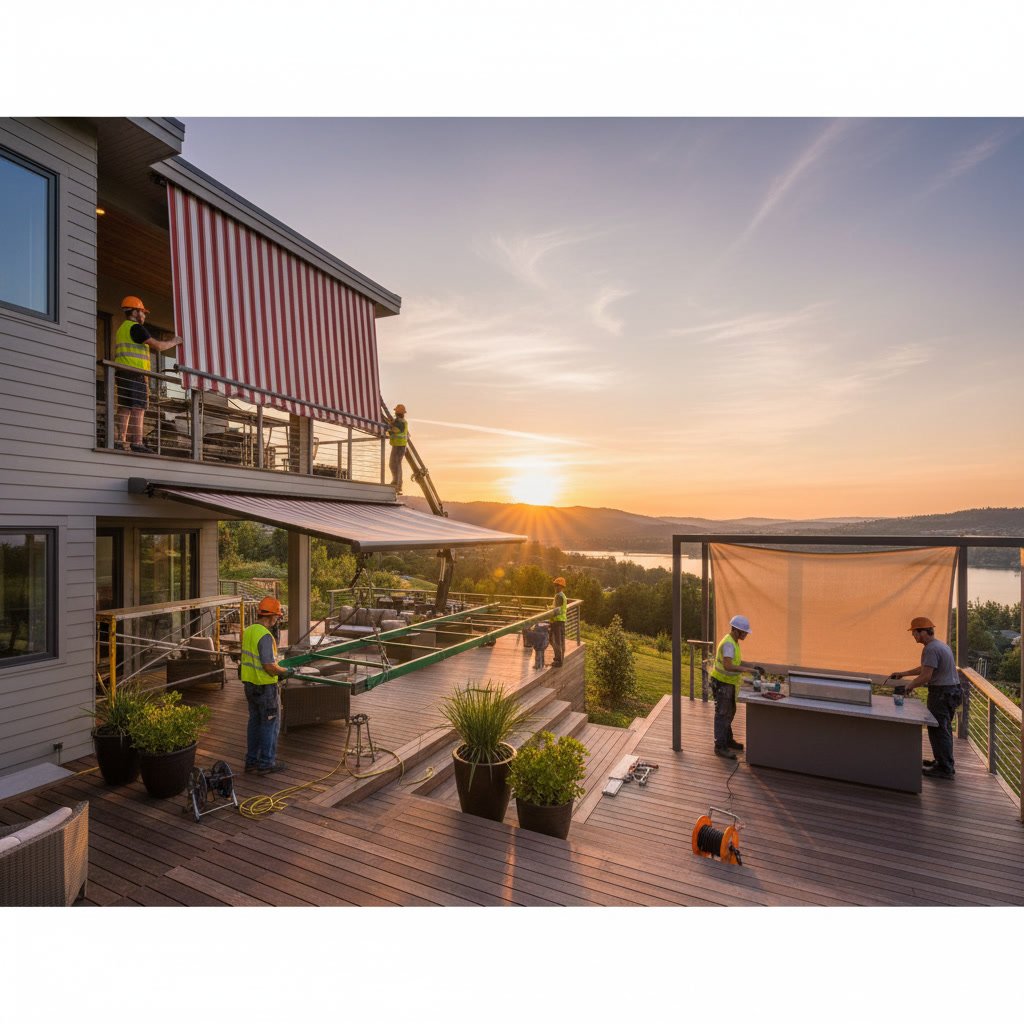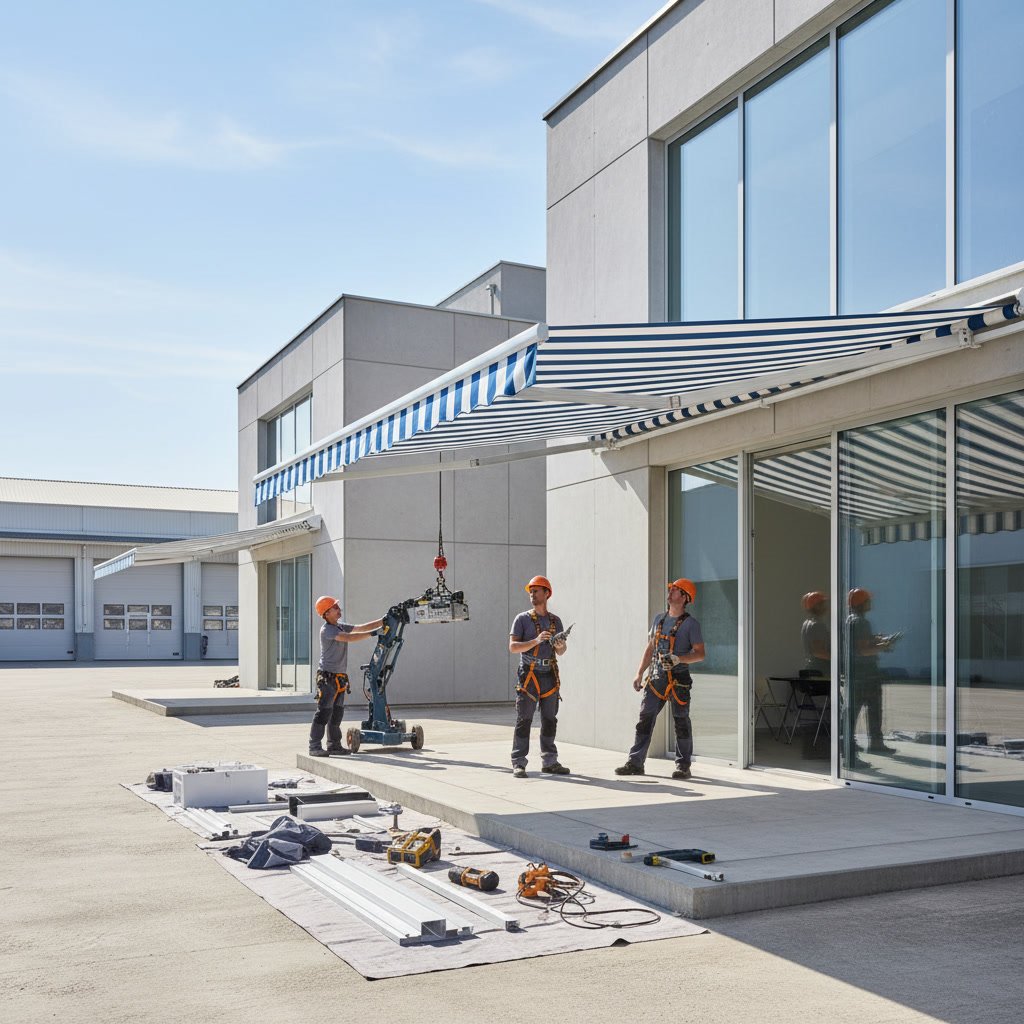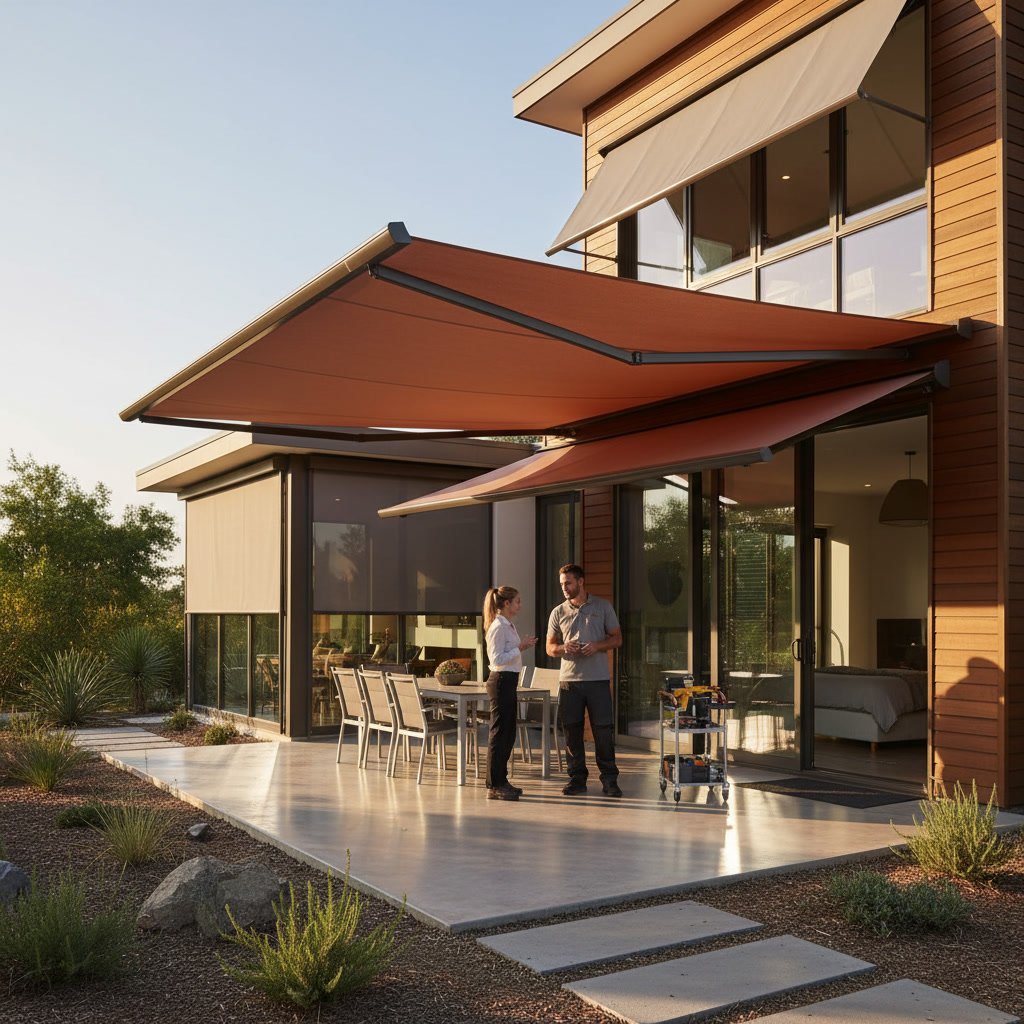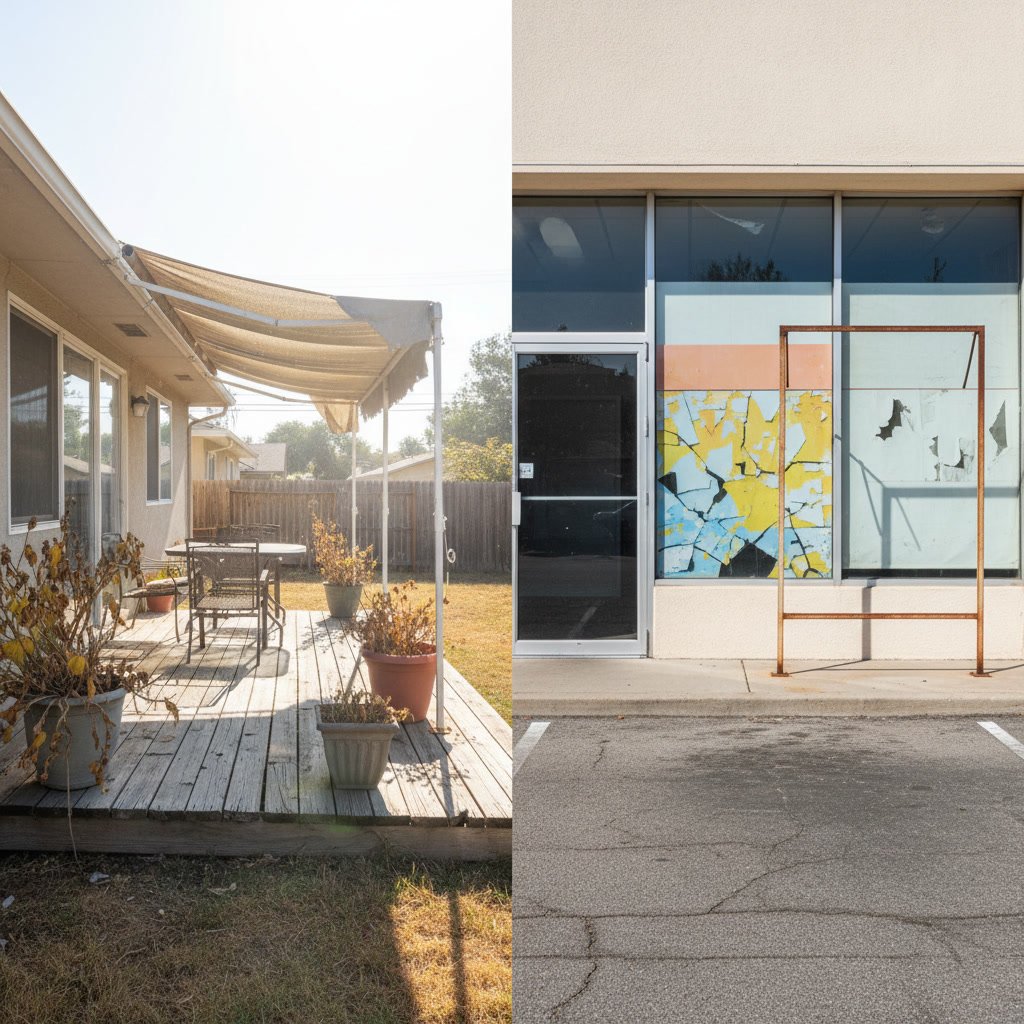
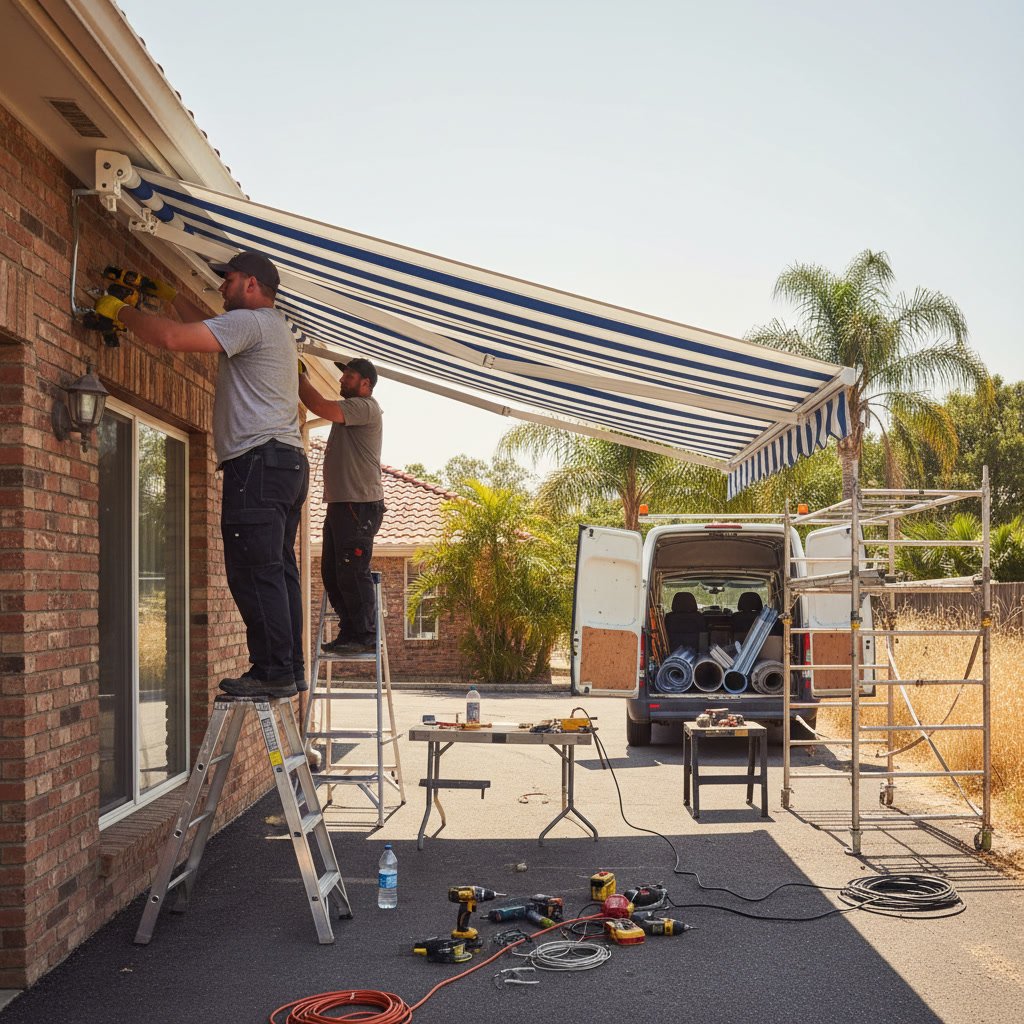
Summer awning installation requires careful planning because extreme heat directly impacts material expansion, adhesive curing, and installer safety. Professional installers adjust their techniques based on temperature, typically scheduling work during cooler morning hours and allowing extra time for materials to acclimate. The heat affects fabric tension, hardware expansion, and even the structural mounting process, making summer installations more complex than installations during milder seasons.
Why Temperature Matters During Installation
Metal components expand in high heat, and this expansion must be accounted for during the mounting process. Aluminum frames can expand up to 1/8 inch per 10 feet when temperatures climb above 90 degrees. If an installer mounts hardware when metal is fully expanded, the awning may develop stress points or binding issues once temperatures cool down in the evening or fall.
Fabric also responds to temperature changes. Acrylic and vinyl awning fabrics become more pliable in heat, which affects how tightly they can be tensioned during setup. A fabric stretched perfectly at 95 degrees may sag slightly when temperatures drop to 70 degrees. Experienced installers compensate by adjusting tension based on both current temperature and expected seasonal temperature ranges.
How Heat Impacts Installation Timing on Kent Island
Coastal areas like Kent Island experience high humidity alongside summer heat, creating additional challenges. Humidity slows adhesive curing times and can cause mounting sealants to take twice as long to set properly. This means installers need to factor in longer setup times and may need to schedule follow-up adjustments.
Most professional teams start work between 7 and 9 a.m. during summer months. This window provides enough daylight to work safely while avoiding peak afternoon temperatures. Starting early also protects both the installation crew and the materials from unnecessary heat stress.
Material Selection for Summer Projects
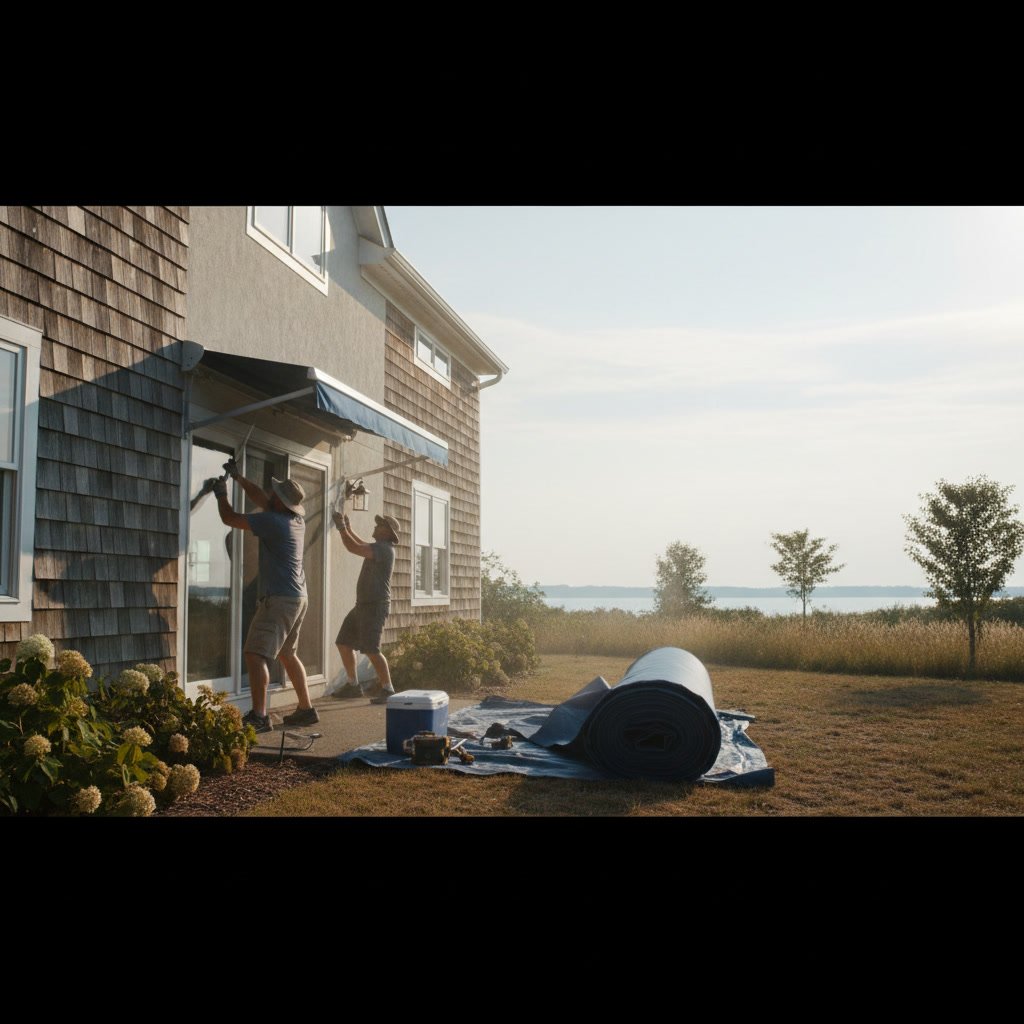
Not all awning materials perform equally well when installed during hot weather. Solution-dyed acrylic fabrics handle heat better than vinyl-coated options because they breathe and resist heat buildup. Vinyl can become tacky and difficult to work with when surface temperatures exceed 100 degrees.
Powder-coated aluminum frames resist heat-related warping better than painted steel. The powder coating also maintains its integrity during installation, while painted surfaces may show handling marks if touched before they cool. When planning a sales and installations project for summer, discussing material options with your installer helps ensure long-term performance.
The Acclimation Period
Professional installers know that materials need time to adjust to ambient temperature before installation begins. Awning components delivered in an air-conditioned truck and immediately installed in 95-degree heat will continue expanding for 30 to 45 minutes after mounting. This expansion can throw off measurements and create tension issues.
The best practice involves unloading materials and allowing them to sit in the shade near the installation site for at least an hour. This acclimation period lets metal and fabric reach ambient temperature, ensuring accurate measurements and proper tension settings. While this adds time to the project, it prevents callbacks for adjustments later.
Three Critical Steps for Summer Setup
First, installers must verify that mounting surfaces are cool enough to handle adhesives and sealants. A surface that feels hot to the touch is too warm for proper adhesive bonding. Using an infrared thermometer to check wall or soffit temperatures ensures mounting brackets will bond correctly.
Second, hardware should be loosely assembled first, then tightened gradually as components cool. This allows for natural contraction without creating stress points. Rushing this step to finish before afternoon heat arrives often leads to mechanical problems within the first season.
Third, fabric tension must be set with future temperature drops in mind. A good rule for summer installations is to tension fabric about 5% tighter than normal, accounting for the slight stretch that occurs in heat. This prevents sagging when temperatures moderate in fall.
Safety Considerations During Hot Weather Work
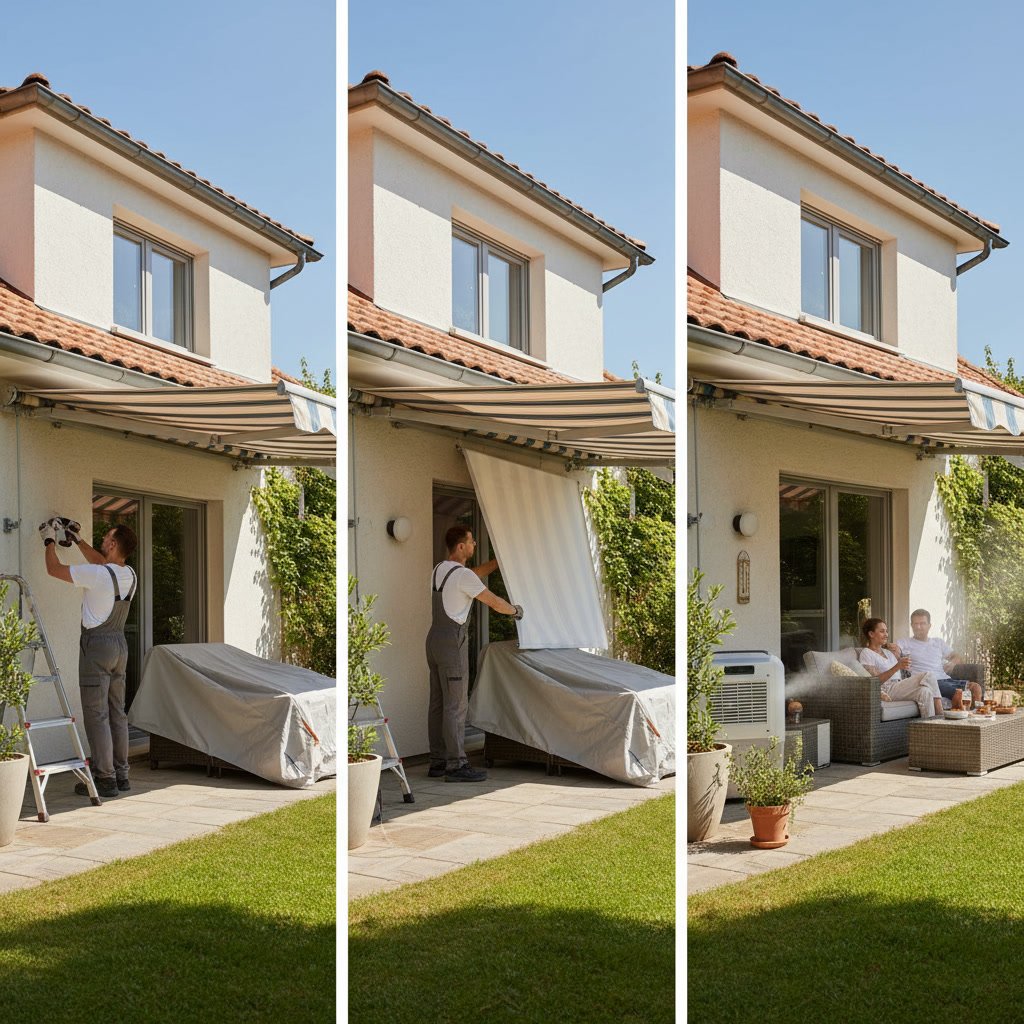
Installer safety directly impacts installation quality. Heat exhaustion reduces precision and increases the risk of measurement errors or forgotten steps. Professional crews take frequent breaks, stay hydrated, and monitor each other for signs of heat stress.
Roof and wall surfaces can reach temperatures 40 to 50 degrees higher than ambient air temperature. Walking on a metal roof or working against a brick wall in direct sunlight creates additional heat exposure. Understanding the full scope of how awning installation works from measurement to final setup helps homeowners appreciate why summer projects may take longer than expected.
Retractable vs. Stationary Summer Installations
Retractable awnings require more precise calibration than stationary models, and heat compounds this complexity. The motorized components and spring tension systems in retractable units must be calibrated to operate smoothly across a wide temperature range. A motor calibrated at 90 degrees may struggle or bind when operating at 60 degrees unless properly adjusted.
Stationary awnings face fewer heat-related installation challenges but still require careful attention to material expansion. The fixed nature means there is no adjustment mechanism to compensate for installation errors, making the initial setup even more critical.
Best Months for Installation Projects
While summer installation is possible with proper techniques, late spring and early fall offer ideal conditions. Temperatures between 60 and 80 degrees minimize material expansion issues and allow adhesives to cure at optimal rates. However, if you need shade coverage for the current summer season, waiting until fall defeats the purpose.
Working with experienced installers who understand heat compensation techniques ensures successful summer projects. Companies that have handled hundreds of installations know exactly how to adjust their process for temperature extremes. For projects in areas like Annapolis or surrounding regions, choosing a contractor with local experience makes a measurable difference.
Post-Installation Adjustments
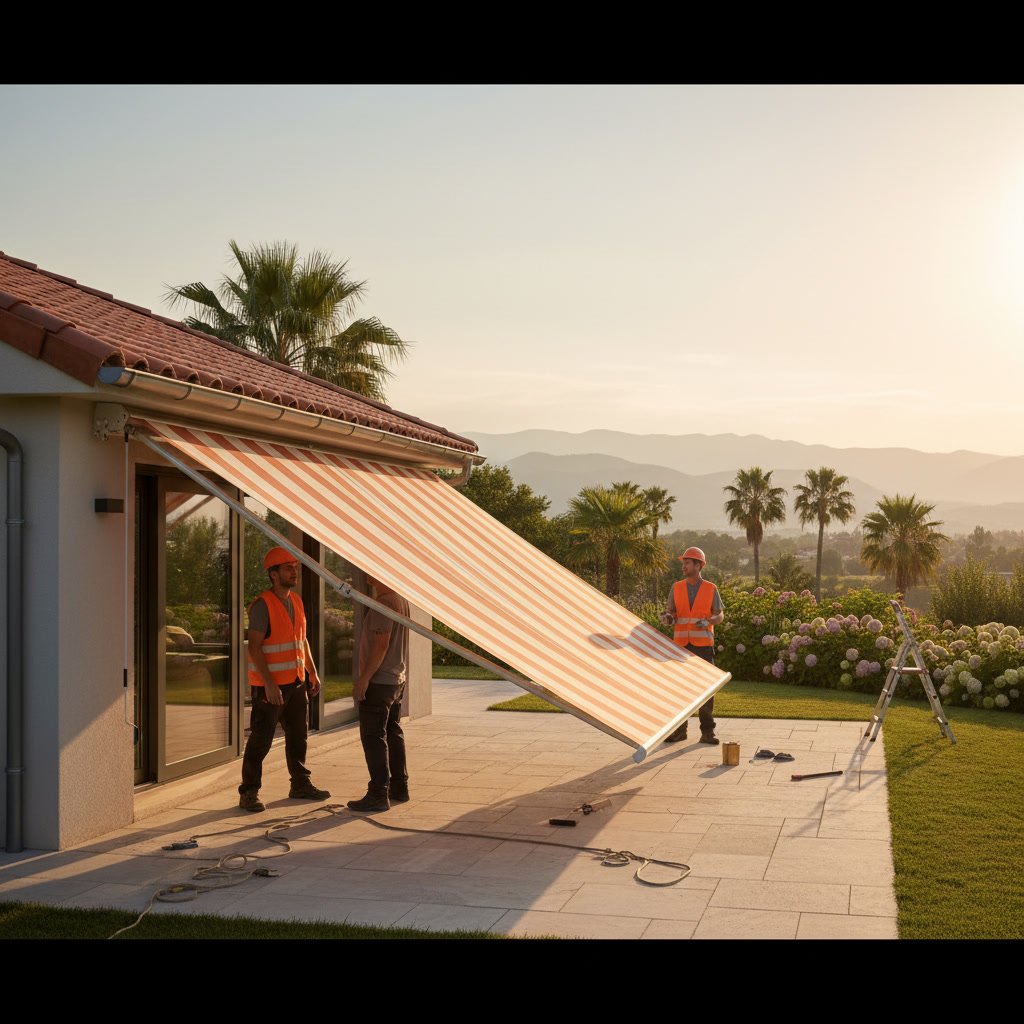
Even perfectly executed summer installations may require minor adjustments once temperatures moderate. This is normal and expected. Reputable installers include a follow-up visit in their service package to check tension, alignment, and operation after the awning has gone through a full temperature cycle.
Most adjustments involve minor tension tweaks or lubrication of moving parts. These quick visits ensure your awning performs optimally year-round. Regular maintenance and repairs extend the life of any awning, but summer-installed units benefit especially from that first seasonal checkup.
Cost Implications of Summer Installation
Some homeowners wonder if summer installations cost more due to the additional complexity. Most professional installers charge the same rate year-round, though scheduling may be tighter during peak season. The extra time required for material acclimation and heat-compensation techniques is typically built into standard pricing.
Understanding typical pricing structures helps with budget planning. If you are exploring options, reviewing information about awning installation costs in Maryland provides useful context for comparing quotes and understanding what different price points include.
Working With Experienced Professionals Matters
Summer heat does not make installation impossible, but it does require knowledge and experience to handle correctly. A contractor who rushes through a summer installation without accounting for temperature effects will deliver a product that underperforms within months. Conversely, an installer who understands material science and takes appropriate precautions will deliver an awning that functions perfectly for years.
The difference between adequate and excellent summer installation comes down to experience. Awning “R” Us has completed thousands of installations across all seasons, developing proven techniques for handling Maryland’s summer heat. Factory-direct materials combined with proper installation methods ensure your investment performs as expected regardless of installation timing.
When you are ready to add shade to your outdoor space, professional guidance makes the process straightforward. Whether you need residential shade coverage or have questions about how heat will affect your specific project, experienced installers can provide clear answers and realistic timelines. Reach out to Awning “R” Us at +14107397544 to discuss your project and schedule an installation that accounts for summer conditions.