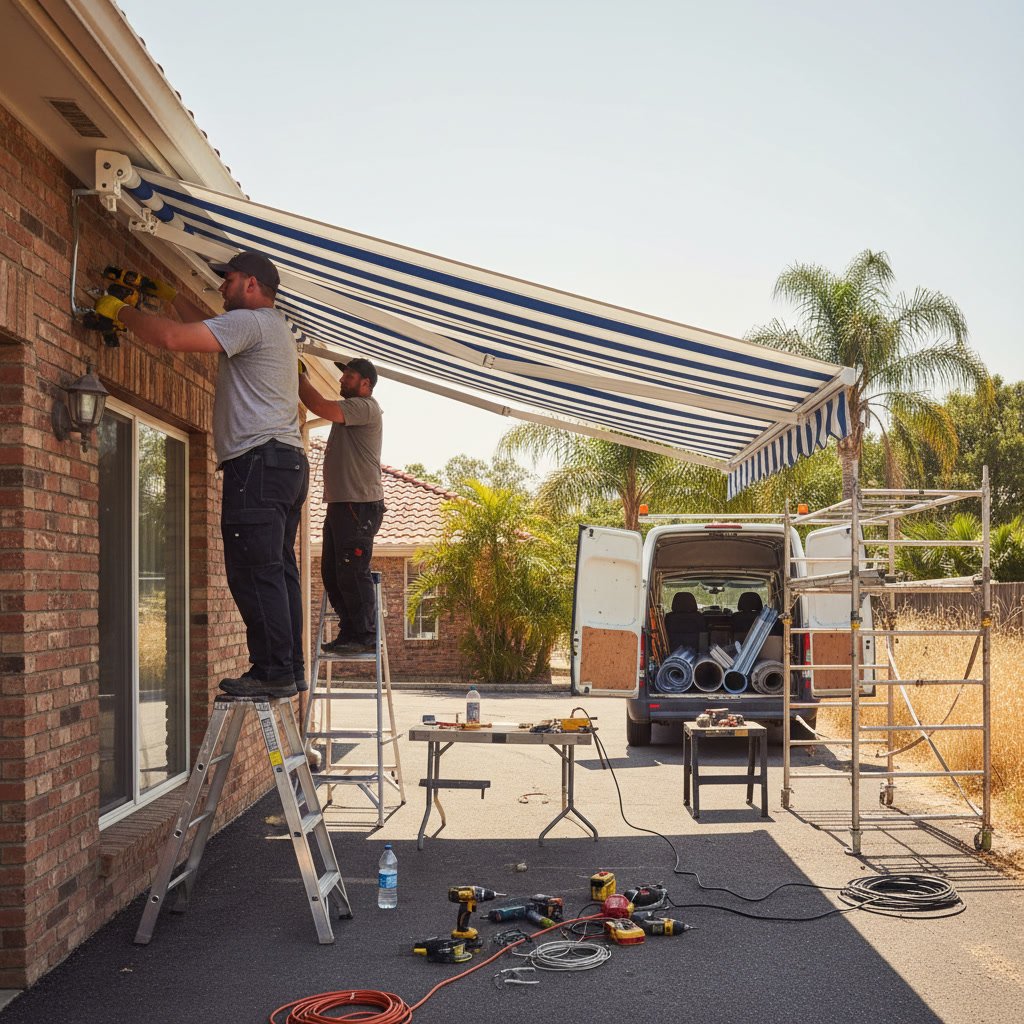
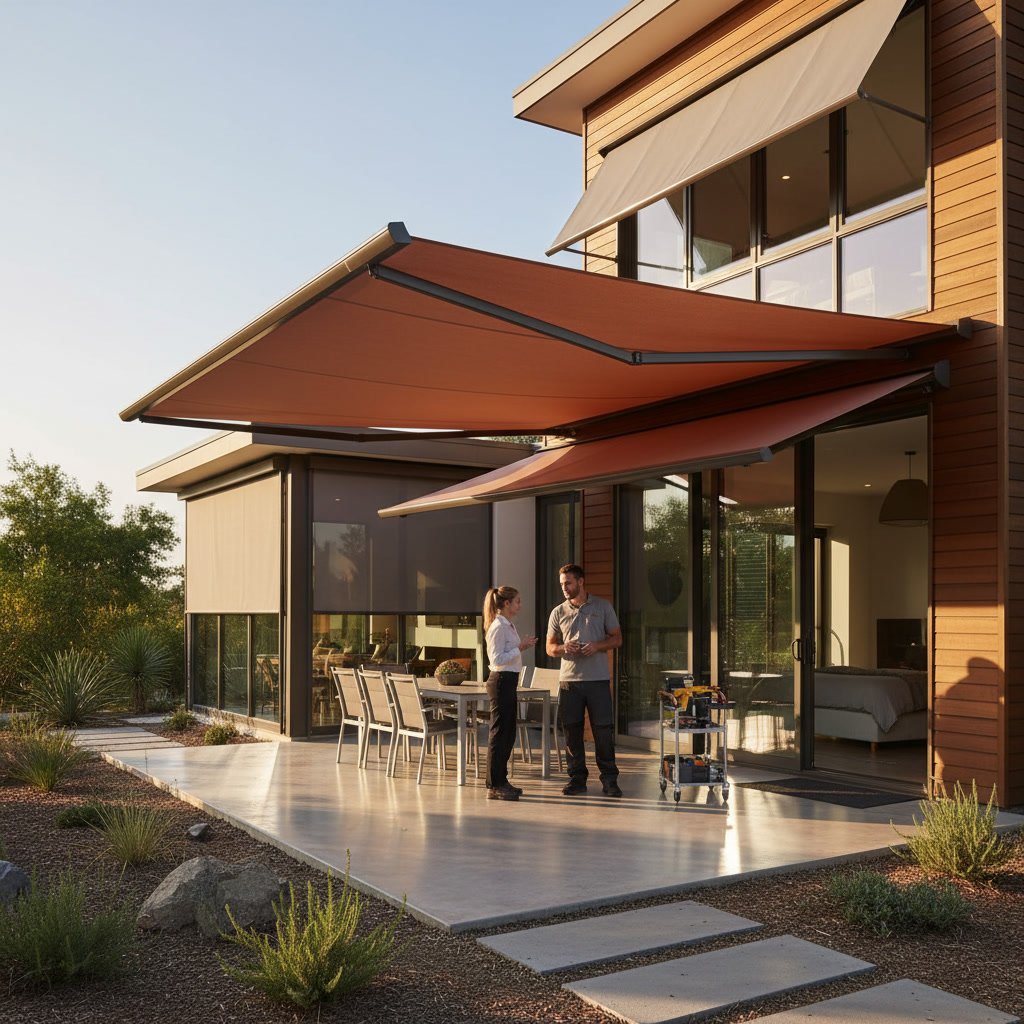
The right awning size placement can reduce your home’s cooling costs by up to 25% during Maryland’s hot summer months. A properly sized awning positioned on south or west-facing windows blocks direct sunlight before it heats interior spaces, while also creating comfortable outdoor living areas. The key is matching awning dimensions to window size, sun angle, and your specific energy-saving goals.
Why Your Awning Dimensions Matter More Than You Think
An undersized awning leaves gaps where harsh sunlight penetrates, defeating the purpose of installing shade in the first place. Oversized awnings create their own problems. They can block natural light you actually want during cooler months, create unnecessary wind load on your home’s exterior, and cost more than needed.
The Department of Energy reports that awnings can reduce heat gain by 65% on south-facing windows and 77% on west-facing windows. But those numbers only hold true when the awning covers the full window opening plus several inches on all sides. A standard residential window measuring 36 by 60 inches typically needs an awning projection of at least 24 to 30 inches to provide effective midday shade during summer.
Understanding Sun Angles in the Mid-Atlantic Region
Maryland’s latitude means the sun reaches its highest point around 75 degrees above the horizon in June and drops to about 30 degrees in December. This seasonal variation is exactly why awning depth matters so much. A shallow eight-inch projection might block summer sun when it’s nearly overhead but will do nothing during spring and fall when the sun sits lower in the sky.
South-facing windows receive the most consistent sunlight year-round. West-facing windows get intense late-afternoon heat, often the most uncomfortable time of day. East-facing windows catch morning sun, usually less problematic for cooling. North-facing windows rarely need awnings for energy savings but might benefit from weather protection.
Calculating the Right Projection Depth
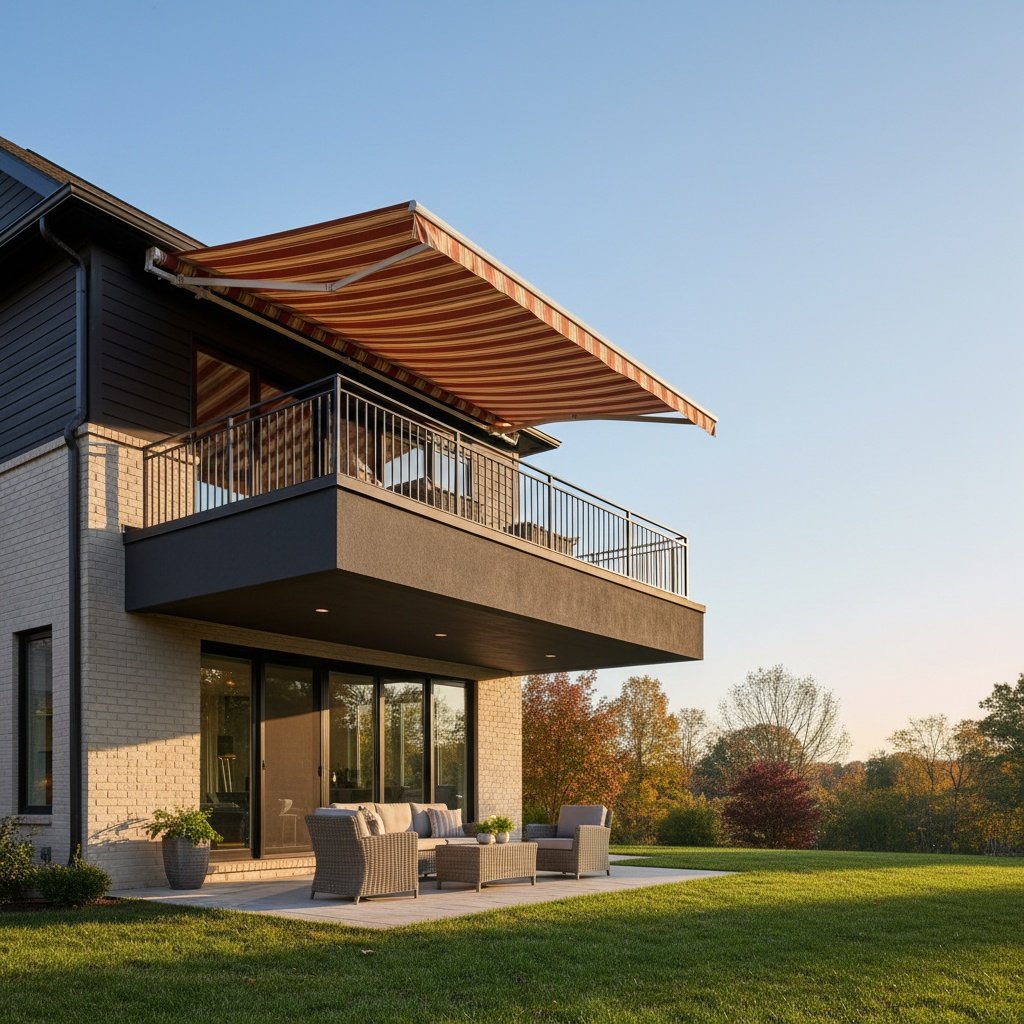
Projection refers to how far the awning extends from your wall. Standard residential awnings range from 18 inches to 48 inches in projection. A useful rule: your awning projection should be roughly half the height of the area you want to shade during peak sun hours.
For a window that’s 60 inches tall, a 30-inch projection provides good coverage when the sun is high. If you want shade later in the afternoon when the sun drops lower, you’ll need more projection. Retractable awnings offer flexibility here since you can extend them fully during hot afternoons and retract them when you want more light.
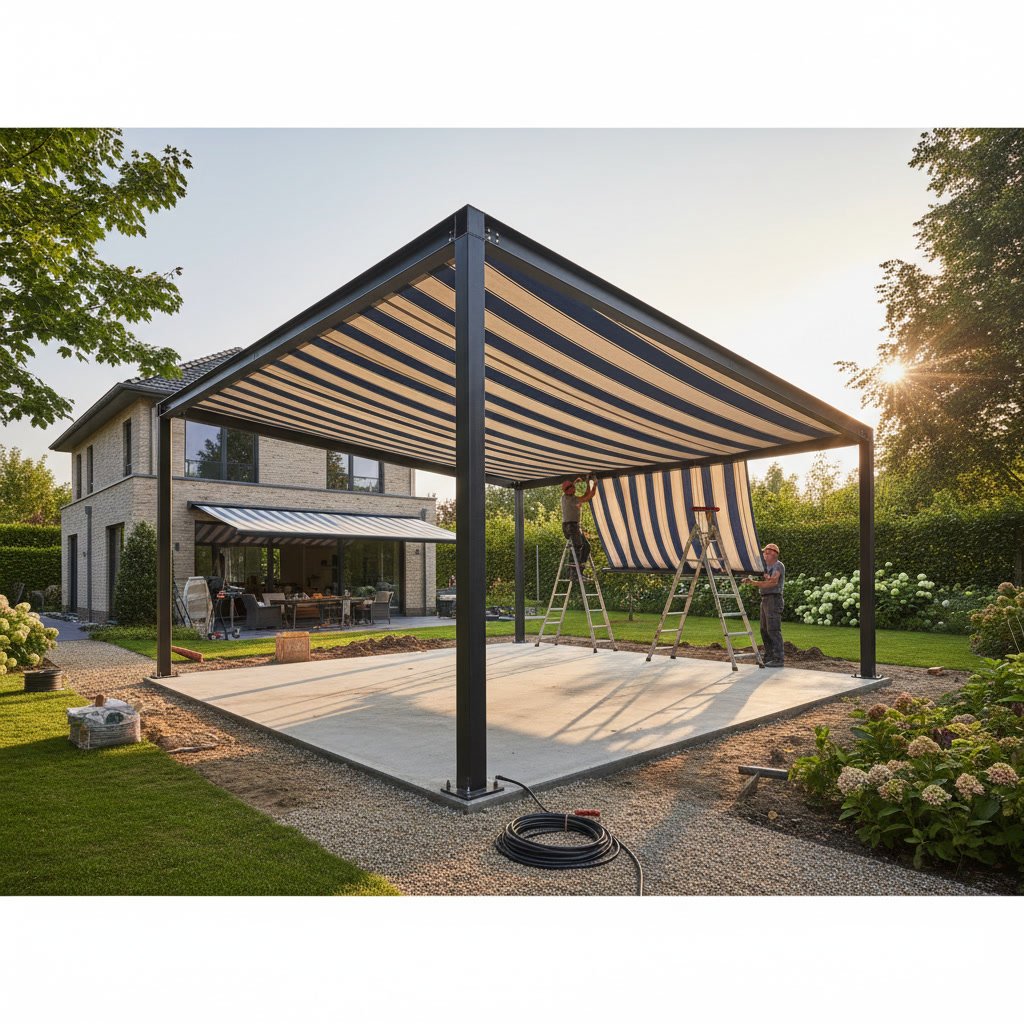
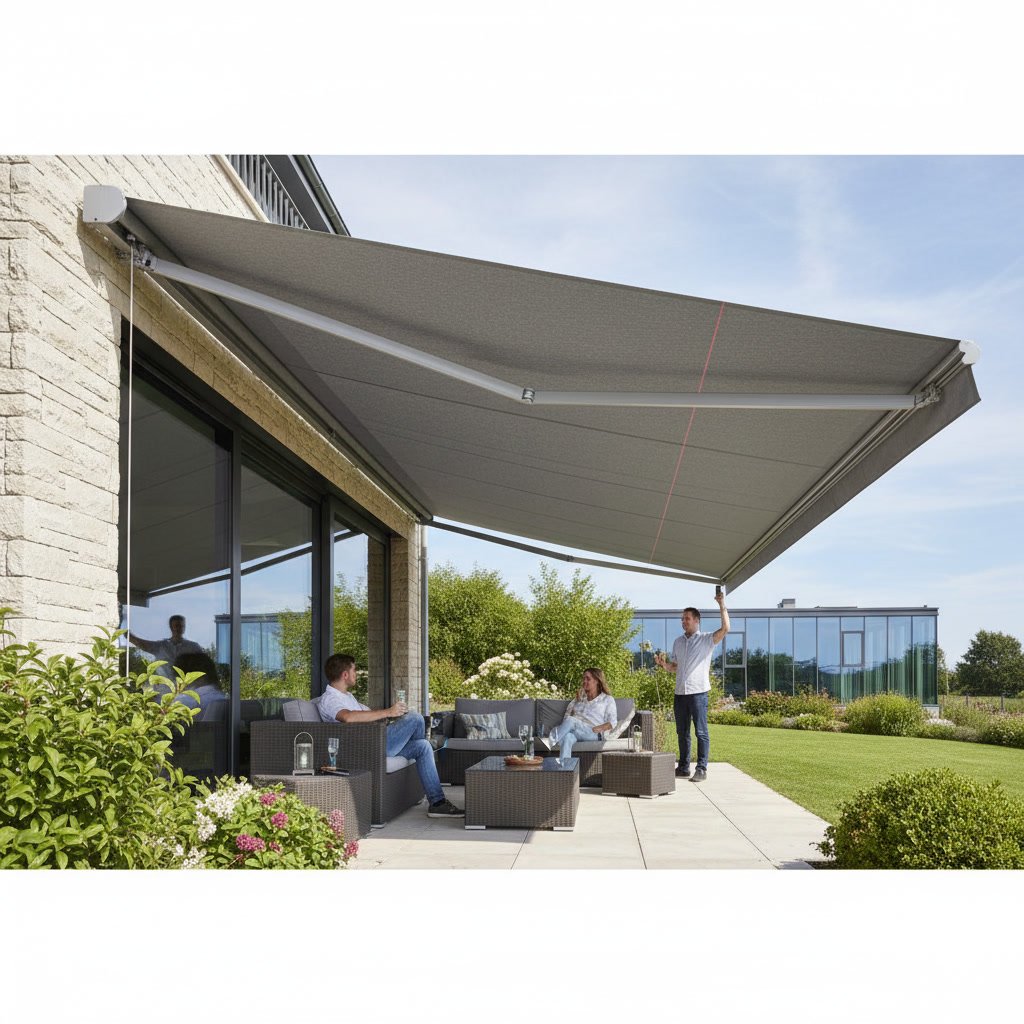
Patio and deck awnings follow different guidelines. Most homeowners find that a 10 to 12-foot projection creates a comfortable outdoor room that stays shaded from mid-morning through early evening. Anything less feels cramped, anything more can feel exposed to wind.
Width and Coverage for Maximum Shade
Your awning should extend at least six inches beyond each side of the window or door opening. This prevents sunlight from sneaking around the edges during morning and afternoon when the sun hits at an angle. For multiple windows grouped together, one continuous awning often performs better than several small individual units.
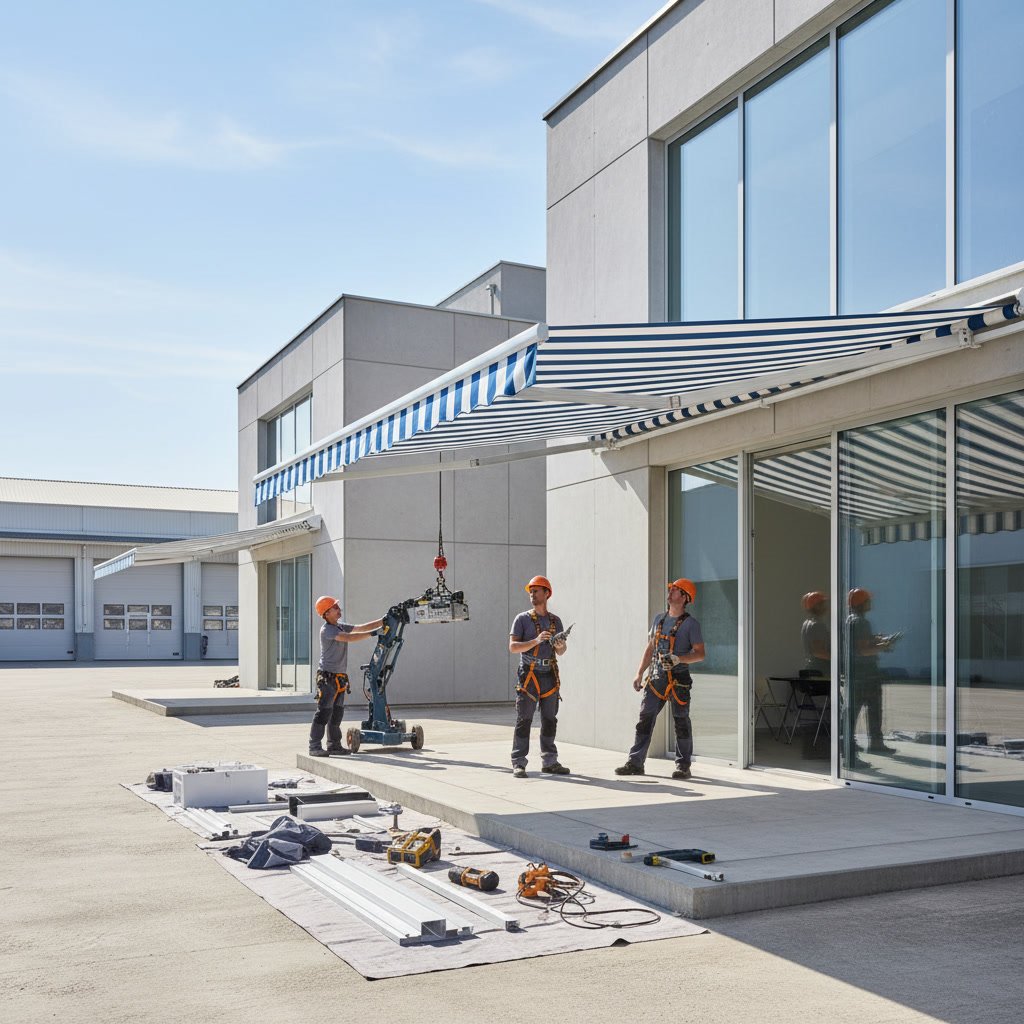
Commercial applications require even more careful planning. Storefronts with large glass facades might need awnings 15 to 20 feet wide. At that scale, proper anchoring and frame strength become critical factors alongside dimensions. Our commercial shade solutions account for both aesthetic appeal and structural requirements.
Window Awning Placement on Kent Island Homes
Homes near the Chesapeake Bay face unique challenges. Afternoon westerly winds can stress improperly installed awnings, and salt air accelerates wear on lower-quality materials. Properties in coastal areas benefit from slightly shorter projections paired with wind sensors on retractable models.
The height at which you mount your awning affects both appearance and function. Install too high above the window and you lose shading efficiency. Too low and you block desirable views. Most window awnings mount with the front bar positioned at or just above the window’s top edge, angled downward at seven to 15 degrees.
How Placement Affects Interior Temperature
External shading outperforms internal window treatments because it blocks heat before it enters your home. Interior blinds and curtains absorb solar radiation that’s already inside, then re-radiate that heat into your living space. An awning stops that energy at the glass.
Studies show a well-placed awning can lower room temperature by 8 to 15 degrees compared to unshaded windows. That translates directly to reduced air conditioning runtime. In a typical Maryland summer, homeowners report 15% to 25% lower cooling costs after installing awnings on their home’s hottest exposures. Understanding what awning installation costs in Maryland helps you calculate your return on investment.
Retractable vs. Fixed: Sizing Considerations
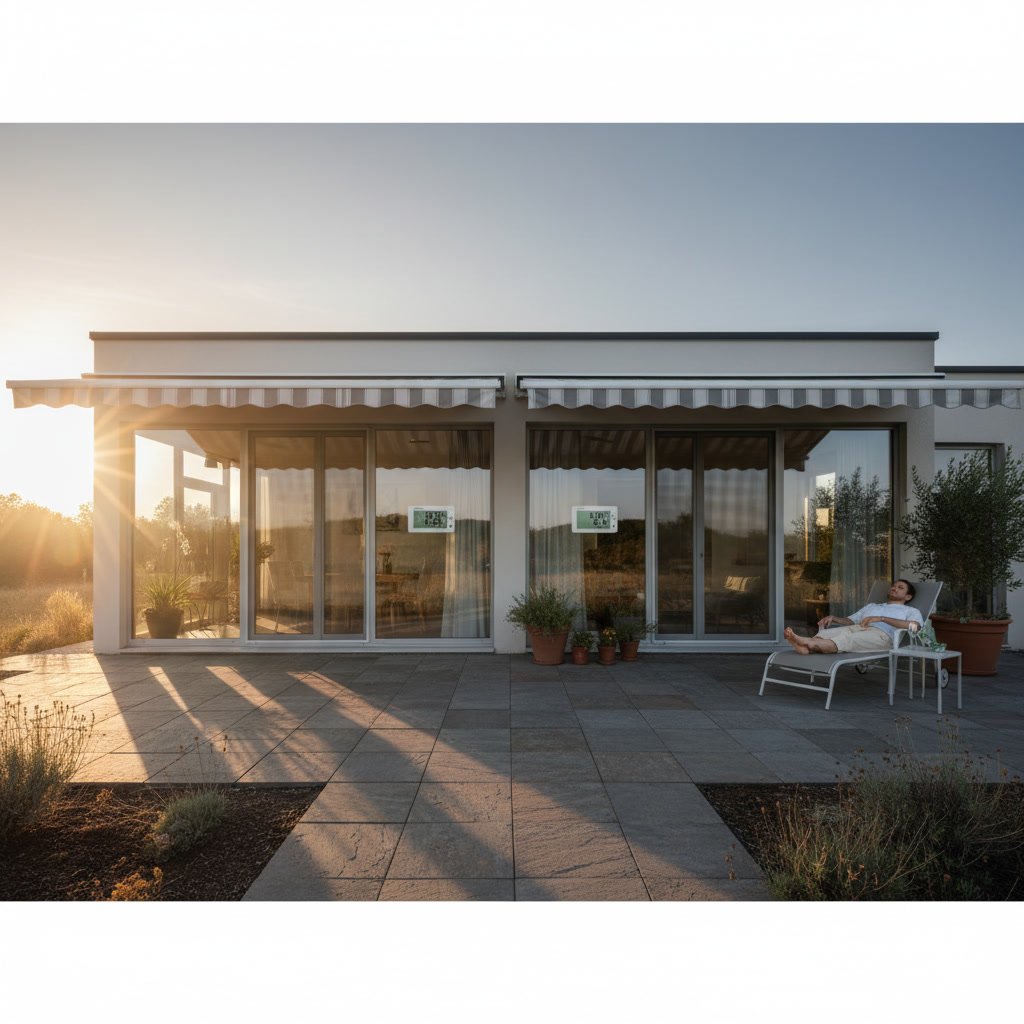
Fixed awnings need more conservative sizing because they stay in place year-round. Make them too large and you’ll lose natural winter sunlight that helps warm your home passively. Retractable awnings allow aggressive sizing since you can retract them during cooler months when you want solar heat gain.
Motorized retractable awnings with sun and wind sensors adjust automatically based on conditions. This smart placement strategy means your awning extends exactly when needed and retracts before damaging winds arrive. Manual retractable units require you to remember to operate them, which many homeowners find inconvenient after the initial novelty wears off.
Common Sizing Mistakes That Reduce Performance
The most frequent error is choosing an awning based solely on the product’s width without considering projection. A 12-foot-wide awning sounds impressive, but if it only projects 18 inches, it won’t provide meaningful afternoon shade on a patio.
Another mistake is ignoring nearby structures. Trees, roof overhangs, and adjacent buildings all cast shadows that change throughout the day. An awning that seems perfectly sized in morning light might prove redundant by afternoon if a large oak tree already shades that area. Similarly, placing an awning where an existing roof overhang already provides coverage wastes money.
Matching awning style to architectural features matters too. A traditional dome or waterfall awning might look out of place on a contemporary home, regardless of how well-sized it is. Our residential shade solutions include style consultations to ensure your awning complements your home’s design.
Professional Measurement Makes the Difference
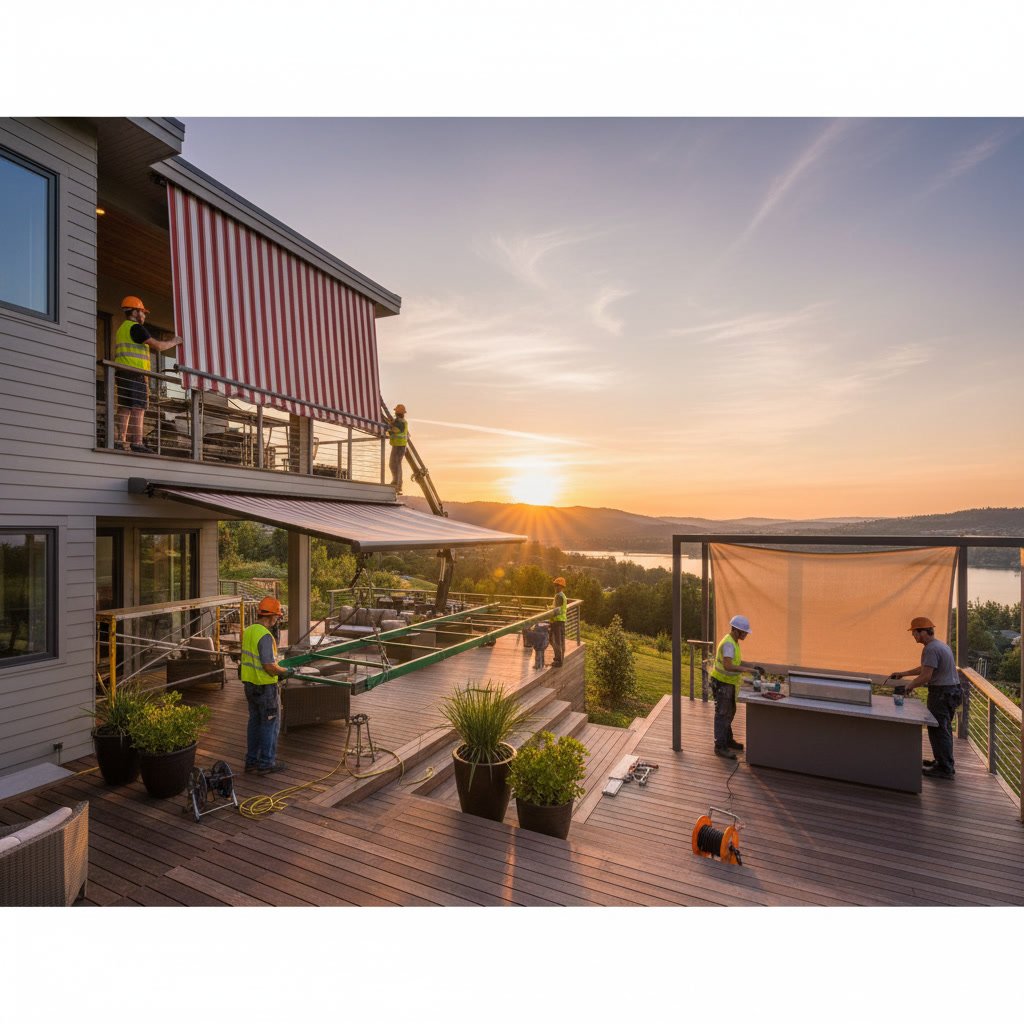
DIY measurements often miss critical details. Professional installers account for fascia depth, window trim, existing wiring or fixtures, and structural attachment points. They also verify that walls can support the awning’s weight and wind load, something homeowners rarely consider.
A one-inch measuring error might seem trivial, but at installation it can mean drilling new mounting holes or accepting a less-than-perfect fit. Experienced installers also spot potential drainage issues. Water must run off the awning’s edges, not pool on the fabric or drip onto walkways. Proper slope built into the installation prevents these problems.
Balancing Shade Coverage with Aesthetic Appeal
Function matters most, but appearance runs a close second. An awning that dominates your home’s facade can reduce curb appeal and property value. Multiple smaller awnings sometimes look better than one massive unit, even if the single large awning would provide slightly better coverage.
Color and fabric pattern also influence perceived size. Dark colors make awnings appear smaller and recede visually. Light colors and bold stripes draw attention and make the awning feel larger. If you’re concerned about an awning overwhelming your home’s exterior, choose subdued colors that blend with existing trim and siding.
Valance height, the decorative trim along the awning’s front edge, affects proportion. Taller valances suit larger awnings and traditional architecture. Short or no valances work better on contemporary homes with clean lines. Getting these details right during the planning stage prevents regret after installation.
Making Your Investment Work Harder for You
Proper awning size placement delivers benefits that compound over time. Lower energy bills accumulate month after month. Protected outdoor spaces add functional square footage to your home without the cost of an addition. UV-blocking fabric preserves interior furnishings, carpets, and artwork that would otherwise fade in direct sunlight.
Quality materials and professional installation protect this investment. Factory-direct awnings from Awning “R” Us eliminate middleman markups while maintaining commercial-grade durability. Our three-generation family business has refined the sizing and placement process through thousands of Maryland installations, and we back every project with both fabric warranties and labor guarantees.
The right awning in the right spot transforms how you use your property. It turns a too-hot patio into your favorite summer gathering space. It cuts the afternoon glare that made your home office uncomfortable. It lets you enjoy morning coffee on the deck without squinting into the rising sun. These quality-of-life improvements matter as much as the measurable energy savings.
If you’re ready to improve your outdoor comfort and reduce cooling costs with properly sized and positioned awnings, Awning “R” Us can help you find the perfect solution for your property. Our team handles everything from initial measurements through final installation, ensuring your awning performs exactly as intended. Reach out at +14107397544 to schedule a free consultation and discover how the right awning can make your Maryland home more comfortable and efficient.